
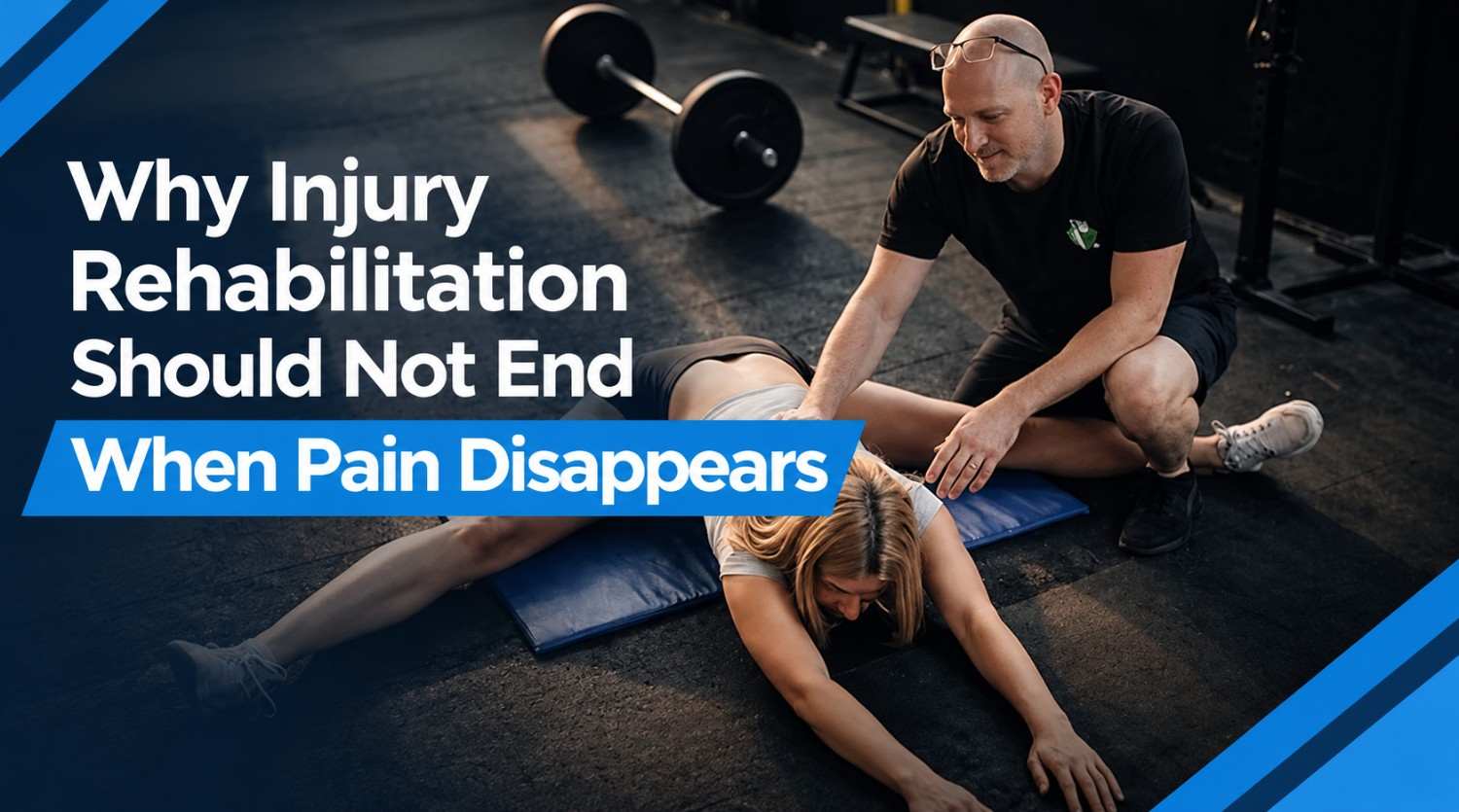
Why Injury Rehabilitation Should Not End When Pain Disappears
There is no pain, so are you healed? Not quite. Just imagine: you have been suffering from an injury for weeks. You have followed your treatment plan, rested, done your exercises, and finally you realise that there is no annoying ache. Relief! It is easy to think that there is no issue. The pain is gone. But feeling better does not actually mean that you are fully recovered. Let’s learn why!
Top Reasons Recovery Does Not End Even When Pain Stops
Pain-Free Doesn’t Mean Fully Recovered
Think of your body like a car. If the warning light on your dashboard turns off, will you immediately go for a long road trip? Probably not. The same idea applies to injuries. Pain might disappear. But it does not mean that your muscles regain their strength, joints recover full range of motion, or your movement patterns are normal. If you jump straight back into intense activities, it can cause trouble.
Your Body Needs More Than Pain Relief
This is where injury rehabilitation plays an important role. A proper rehabilitation program does not end when pain disappears. It helps your body handle the demands you are going to place on it again. Depending on the injury, a rehabilitation program helps you:
- Restore strength and endurance
- Improve flexibility and mobility
- Build balance and coordination
- Correct movement pattern
- Prepare the body for work, exercise, or sport
The Risk of Returning Too Soon
This is where things can get problematic. When pain disappears, you might want to rush back. You try your usual workout, sport, job, or daily routine at full intensity. But if your body is not ready, that sudden increase in activity can place excessive stress on the injured area. And suddenly… injury comes back again. So, give time to your body to recover.
Recovery Is a Process, Not a Pain Meter
One of the biggest mistakes people make is treating pain like a simple recovery score
- Pain means injured
- Zero pain means fully healed
Real recovery is not that simple. Your rehabilitation professional first assesses factors such as strength, movement quality, flexibility, balance, and endurance before advising you to return to full activity. That extra effort can make your comeback more confident and controlled.
Do not just chase a pain-free day. You have to build a stronger comeback. The disappearance of pain is fantastic. Celebrate it! But do not see it as complete recovery.




Leave a Reply